The Reggio Emilia approach is a unique educational philosophy originating from Italy, focusing on preschool and primary education. It emphasizes child-centered learning, where children are active participants in their learning journey. This approach is celebrated worldwide for fostering creativity, collaboration, and critical thinking in students. By prioritizing the rights and opinions of children, the Reggio Emilia approach creates a nurturing and empowering environment for young learners. Understanding the key elements of this methodology can illuminate its impact on education and shape our views on effective teaching practices.
1. What is the Reggio Emilia approach to education?
The Reggio Emilia approach is rooted in the belief that children are capable individuals with an innate curiosity and desire to learn. Originating after World War II, it was developed by educator Loris Malaguzzi and parents in the villages around Reggio Emilia, Italy. Unlike traditional educational models, this approach emphasizes experiential learning, where children are encouraged to explore and investigate their interests. Students often engage in projects that allow them to delve into subjects creatively and collaboratively. The philosophy integrates art, music, language, and science seamlessly, providing a holistic education that respects the individuality of each child.
A key feature of Reggio Emilia elementary schools is their commitment to respecting children’s voices, making them active participants in their learning. Educators view children as strong, capable, and resilient individuals who possess the right to express their thoughts and ideas. Accordingly, teachers facilitate rather than direct learning, tuning into the students’ inquiries and guiding them towards exploration and understanding. This child-centric approach enables the development of critical thinking, problem-solving skills, and self-esteem in children. The approach fosters a sense of ownership in students, allowing them to feel empowered and motivated in their educational pursuits.
Project-based learning is at the heart of the Reggio Emilia method, where students engage in in-depth investigations of topics of interest. This form of learning encourages children to ask questions, investigate solutions, and present their findings creatively. Projects can range from short-term explorations to year-long studies, depending on the curiosity and engagement levels of the students. The emphasis on group work and collaboration ensures that children learn from each other, share ideas, and appreciate diverse perspectives. Through this process, students develop a deeper understanding of the subjects they study and gain confidence in their ability to contribute to knowledge.
2. How does the environment play a role in Reggio Emilia schools?
The environment in Reggio Emilia schools is often referred to as the “third teacher,” highlighting its importance in children’s educational experience. Classrooms are designed to be flexible, inviting, and supportive of exploration. They are filled with natural light, open spaces, and a variety of materials that encourage children to interact and learn. These carefully curated spaces promote autonomy and inspire creativity, giving students the freedom to follow their interests and instincts. The layout and organization of the environment reflect respect for children and their capabilities, supporting their growth and learning processes.
Materials and resources are strategically placed to promote active investigation and engagement. Natural items, art supplies, and everyday objects are used creatively to foster learning and curiosity. The use of transparent walls and open shelving allows for easy access and visibility, creating an atmosphere of transparency and collaboration. This openness encourages students to observe their peers’ work, sparking new ideas and promoting dialogue. By being surrounded by such a rich and stimulating environment, children are inspired to express their creativity and imagination freely, enhancing their educational experiences.
The physical space in Reggio Emilia schools extends beyond the classroom to include outdoor and communal areas. Gardens, play areas, and communal spaces are integral to the learning environment, connecting children with nature and their communities. Outdoor environments are treated as extensions of the classroom, where children can engage in physical activity, explore the natural world, and learn about the environment. Collaborative spaces allow for interaction among classes and age groups, fostering a sense of community and shared learning. This holistic approach to the environment ensures that children can learn in diverse settings, enriching their educational journey.
3. What is the role of teachers and parents?
In Reggio Emilia schools, teachers serve as co-learners and researchers rather than traditional instructors. They observe, document, and listen to the children’s ideas, facilitating learning experiences that build on students’ interests. By closely engaging with students, teachers identify opportunities to introduce new concepts and provoke deeper thinking. This dynamic role allows educators to tailor the curriculum to suit individual and group interests, making learning relevant and meaningful. The collaborative relationship between teachers and students enhances the educational environment, enabling children to take ownership of their learning processes.
Parents are seen as vital partners in the educational journey in Reggio Emilia schools. Their involvement is encouraged through regular communication, meetings, and active participation in school activities. Educators value parents’ insights and perspectives, recognizing them as integral to understanding each child’s background and experiences. This partnership strengthens the home-school connection, creating a cohesive support system for children. By collaborating with families, schools ensure that learning extends beyond the classroom, incorporating diverse experiences and fostering community engagement.
Documentation plays a crucial role in involving both teachers and parents in the learning process. Teachers meticulously record and display children’s work and progress through photographs, videos, and written observations. This documentation serves as a shared resource, fostering dialogue between educators, parents, and students. It provides valuable insights into the learning processes and the children’s development, enabling teachers and parents to reflect and make informed decisions collaboratively. By sharing and celebrating these achievements, the Reggio Emilia approach reinforces the importance of community and collaboration in education.
4. How are creativity and expression fostered?
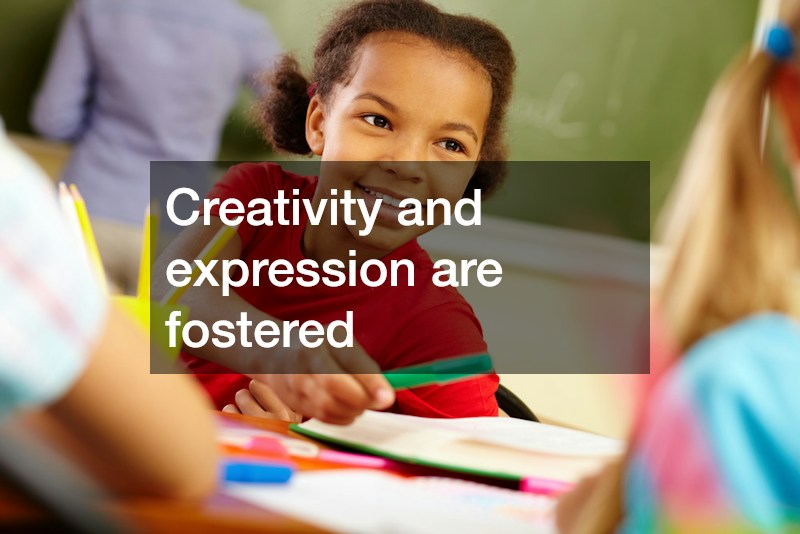
Creativity is at the core of the Reggio Emilia approach, with a strong emphasis on artistic expression and exploration. The use of the “atelier” or art studio is a prominent feature, where children experiment with various media and techniques. This space allows for individual and collaborative creativity, providing children with opportunities to express their ideas visually and tangibly. Art is integrated into the daily curriculum, not treated as a separate subject, encouraging students to draw connections between artistic expression and other areas of learning. By engaging in creative processes, children develop skills in problem-solving, innovation, and communication.
Language and communication are also central to fostering expression in Reggio Emilia schools. Children are encouraged to articulate their thoughts and ideas through storytelling, discussions, and presentations. This focus on communication promotes confidence and enables children to express their feelings and opinions constructively. Educators employ various tools, including technology, to support language development and expression. By facilitating open dialogue and providing diverse platforms for self-expression, the Reggio Emilia approach nurtures articulate and confident learners.
The emphasis on play and exploration further supports creativity and expression in Reggio Emilia schools. Through unstructured play, children engage in imaginative activities that spark curiosity and inventiveness. Play is recognized as a valuable learning process, where children explore roles, experiment with new ideas, and develop social skills. Teachers observe and engage with children during play, introducing new concepts and challenges that provoke creative thinking. This balance of guided instruction and free exploration allows students to express themselves authentically and fosters a love for learning and discovery.
5. What are the outcomes and benefits of the Reggio Emilia approach?
The Reggio Emilia approach has been shown to produce confident, capable, and independent learners who are well-prepared for future academic and social challenges. By emphasizing collaboration and communication, children develop strong interpersonal skills and an appreciation for diverse perspectives. The focus on child-driven learning fosters a sense of agency and responsibility, empowering students to take initiative and make informed decisions. These skills are valuable as children progress through their educational journeys and into adulthood, equipping them for success in various contexts.
Research indicates that students educated under the Reggio Emilia model exhibit strong problem-solving abilities and critical thinking skills. This is attributed to the approach’s emphasis on inquiry-based learning and project work, where students engage in complex thought processes and investigations. By exploring subjects in depth and drawing connections between different areas of knowledge, children develop a robust understanding of concepts. These cognitive skills are essential for navigating the complexities of the modern world, preparing students to tackle challenges creatively and effectively. The comprehensive nature of the Reggio Emilia approach ensures that children leave school with a well-rounded education that supports lifelong learning.
Beyond academic outcomes, the Reggio Emilia approach positively impacts children’s social-emotional development by promoting empathy, resilience, and self-awareness. Students learn to express their emotions constructively and understand the feelings of others through collaboration and reflection. By fostering a supportive and inclusive environment, schools help children develop a strong sense of community and belonging. This holistic focus on personal growth and well-being ensures that students are equipped with the tools to lead fulfilling and harmonious lives. The Reggio Emilia approach demonstrates that education is not just about academic achievement, but nurturing the whole child for future success.
The Reggio Emilia approach offers a distinctive and impactful model for elementary education, prioritizing child-centered learning and community partnership. It uniquely combines an enriching environment, active parental involvement, teacher collaboration, and a focus on creativity to create dynamic and engaging learning experiences. By encouraging exploration, expression, and collaboration, the approach nurtures well-rounded individuals capable of critical thinking and problem-solving. The benefits of this innovative educational model extend beyond the classroom, fostering confident and compassionate individuals prepared for their future challenges. Understanding and embracing the Reggio Emilia method can offer valuable insights for educators and institutions looking to enhance their teaching practices and improve student outcomes.